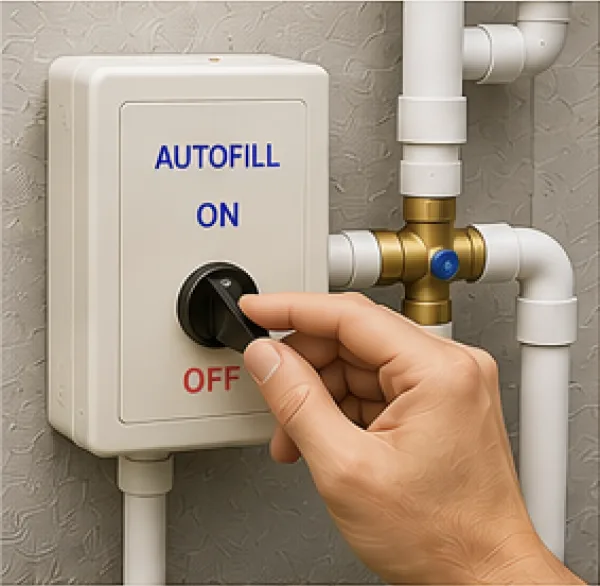
Turn Off the Autofill
Turn off your pool autofill or water leveler before starting the test. An active autofill will mask a leak by automatically adding water, producing a false negative.

The bucket test is a good way to see if you have a leak.
In Central Florida, pool water loss can come from several sources: normal evaporation, wind drift, splash-out from swimmers, heat-driven evaporation, or a hidden leak. Most homeowners notice the water level dropping and don't know which one is responsible. The Bucket Test is the simplest way to compare normal water loss against abnormal water loss, all from your own pool deck, before scheduling a professional pool leak detection visit. We've walked hundreds of Central Florida homeowners through this procedure, and it consistently separates real leaks from evaporation.
The science behind the Bucket Test is straightforward. You're creating a small, controlled environment that experiences the same weather conditions as your pool. Both bodies of water respond to the same sun, air temperature, and humidity. If the pool loses significantly more than the bucket, the difference points to a leak rather than evaporation.
Turn off your pool autofill or water leveler before starting the test. An active autofill will mask a leak by automatically adding water, producing a false negative.
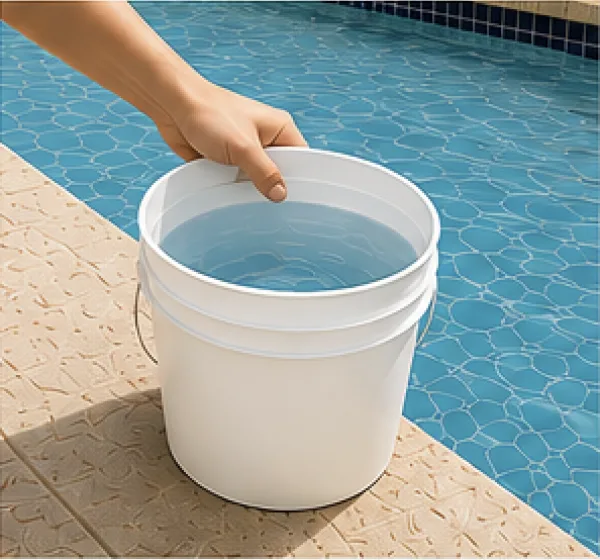
Fill a clean 5-gallon bucket with pool water to about one inch from the rim. Use pool water, not hose water, so the temperature and chemistry match.
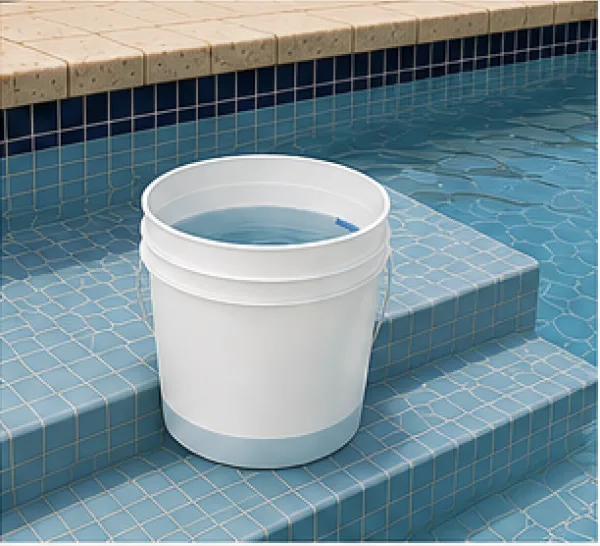
Place the bucket on the first pool step so it sits in roughly the same conditions as the pool itself. Both should be exposed to the same sun, shade, and wind.
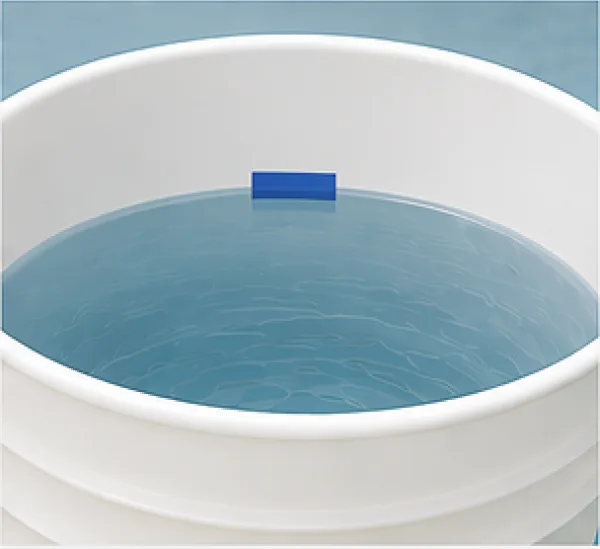
Mark the water level inside the bucket with a piece of tape, a marker, or a small notch on the bucket's edge.
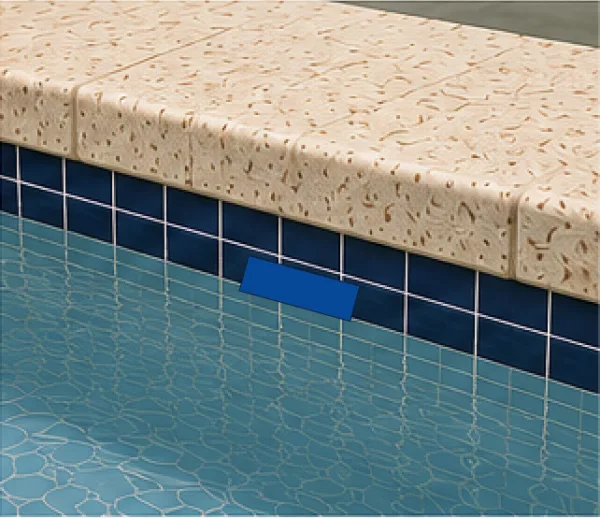
Mark the pool's water level outside the bucket on the tile, coping, or skimmer face at the same time.
Run the pool under its normal operating schedule during the test. Don't change pump times, water features, or anything else mid-test.
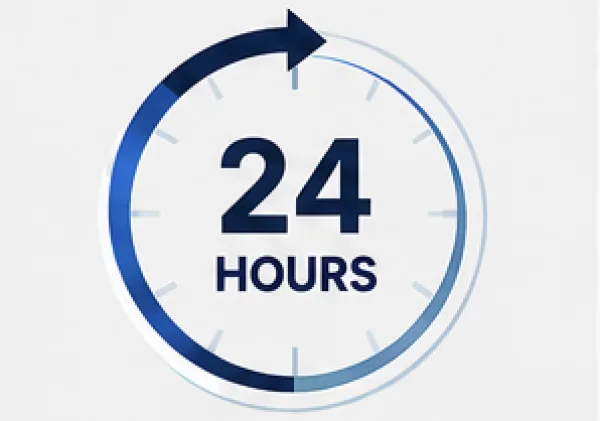
Wait 24 hours. Do not add water, swim, or backwash the filter during the test.
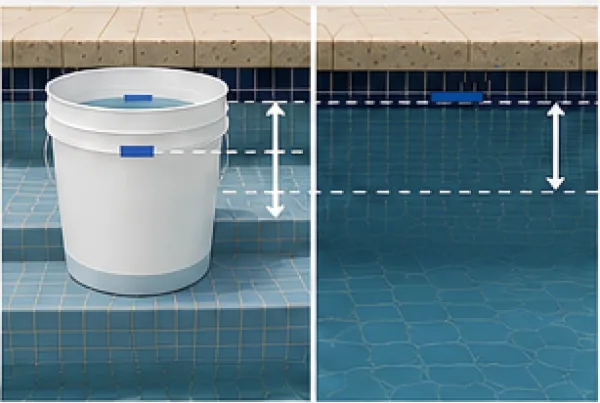
Compare the drop in water levels inside the bucket and in the pool after 24 hours.
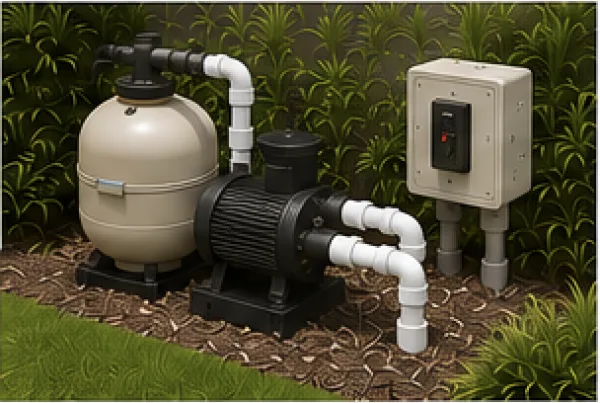
If the pool drops more water than the bucket, repeat the test with the pump OFF to isolate the leak source.

If the pool consistently loses more water than the bucket, you may have a leak. Schedule a professional leak detection.
Prefer the written checklist? Here's the same procedure as a numbered list you can skim quickly.
If the pool loses more water than the bucket, the result is clear: abnormal water loss is happening, and the cause is most likely a leak. To narrow down where the leak is coming from, repeat the test with the pump OFF. If the differential disappears with the pump off, the leak is almost certainly in the circulation system: plumbing lines, return fittings, skimmer, main drain, or light niche. If the leak persists with the pump off, it's more likely in the pool shell or a structural feature.
After 24 hours, you'll have one of three outcomes.
This is the expected result when there is no leak. Evaporation is responsible for the water loss. In Central Florida, normal evaporation ranges from 1/4 to 1/2 inch per day during the warmer months. If you suspect your pool is still losing more than expected, monitor for another week, or consider running the test during cooler weather when evaporation is naturally lower.
This is the classic leak signature. The water that's leaving the pool is going somewhere it shouldn't, whether that's into the ground, through a plumbing line, or out through a structural crack. The Bucket Test has confirmed abnormal water loss, and the next step is professional pool leak detection to locate it precisely. As a rule of thumb, any consistent differential between the bucket and the pool is worth investigating.
This is almost always an issue with the test setup rather than the pool. The bucket may have been exposed to more direct sunlight or wind than the pool, may have been disturbed by splash-out, or rainfall may have hit the bucket but not the pool. Repeat the test, making sure the bucket sits in a stable position on the step and that both bodies of water are exposed to the same conditions.

The Bucket Test is a yes-or-no diagnostic. It confirms whether abnormal water loss exists. It does not tell you where the leak is, what is causing it, or how serious it is.
Locating a leak requires a different set of tools entirely, including pressure testing of individual plumbing lines, electronic listening devices that pick up the sound of water escaping, and dye testing around suspected fittings. Only a trained technician with this equipment can identify the exact source, whether that's a cracked return fitting, a compromised skimmer, a leaking light niche conduit, a hairline crack in the pool shell, or a separation in the underground plumbing.
A confirmed leak is not a problem that fixes itself. Continuing to refill the pool only masks the symptom while the underlying issue worsens. Each inch of water lost per day adds hundreds of gallons to your water bill, increases chemical consumption as the pool struggles to maintain balance, and may allow hidden damage to progress in the soil around your shell, your deck, or your plumbing lines. Small leaks rarely stay small.
If your Bucket Test consistently indicates abnormal water loss, the next step is a professional leak detection visit. We use non-invasive methods to pinpoint the exact location of the leak, then provide a clear written quote for the repair. Most leak detections are completed in one to two hours, and we credit the detection fee toward any repair you book with us.
If you'd like to schedule a visit, request an appointment or call us directly at (407) 307-2735 .
At least 24 hours under normal conditions. In Central Florida’s peak summer heat, you can extend the test to 48 hours for greater accuracy. The longer the test runs, the more reliable the comparison between bucket and pool water loss becomes.
Run the pool under its normal operating schedule during the first test. This is the only way to detect leaks that only appear when the system is under pressure. If the test indicates abnormal water loss, repeat the test with the pump OFF. A leak that shows up only with the pump on is almost always in the circulation system (plumbing, fittings, skimmer, or main drain).
Avoid running the test during heavy rain. A sudden downpour adds unmeasured water to the pool and invalidates the comparison. Pick a clear 24-hour window. If a light shower passes through, the impact is usually negligible. If a sustained rain occurs, drain the bucket, restart the test, and pick a new day.
Yes, before you begin. Your autofill valve automatically tops off the pool when the water level drops, which will mask a leak and give you a false negative. Turn it off, confirm the water is stable, then start the test.
No. The Bucket Test only confirms whether abnormal water loss exists. It cannot determine the location, depth, or cause of a leak. Locating a leak requires professional equipment such as pressure testing, electronic listening devices, and dye testing.
In Central Florida, normal evaporation runs between 1/4 and 1/2 inch per day depending on temperature, humidity, and wind exposure. Anything more than 3/4 inch per day, or any differential between the bucket and pool water, points to a leak that warrants professional attention.
Schedule your professional leak detection visit. We'll confirm your appointment within one business day.
Real Google reviews from real customers.